A saved note saying 'Teddy lipstick' feels specific until several listings appear. A familiar shade word may sit inside different product families, finishes or related shade names. A colour photograph can help with visual interest, but it cannot decide which product the listing identifies. Before comparing prices, establish that the names actually refer to the item you mean.
| Maker example | Identity detail to preserve |
|---|---|
| M·A·Cximal Silky Matte Lipstick — Velvet Teddy | Family, finish and complete shade name |
| M·A·Cximal Silky Matte Lipstick — Warm Teddy | Different complete shade wording |
| Powder Kiss Lipstick — Teddy 2.0 | Different named product family |
A real family of names, not a single interchangeable label
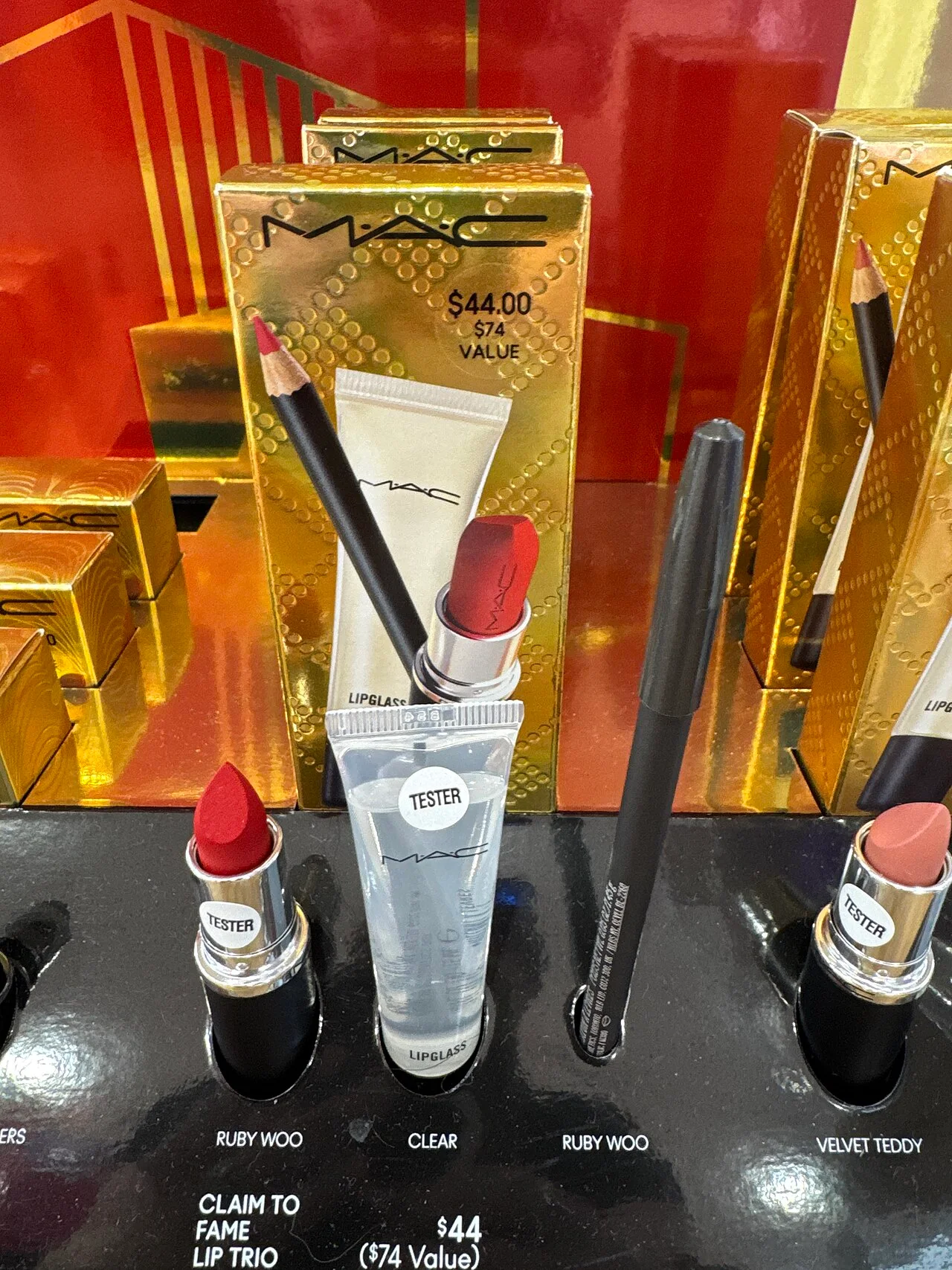
MAC's own Teddy makeup article distinguishes M·A·Cximal Silky Matte Lipstick in Velvet Teddy from Warm Teddy, and also names Powder Kiss Lipstick in Teddy 2.0. These are useful examples because a shared word does not erase the distinctions the maker prints around it. The article does not establish that every Teddy-named product is an identical formula under a different label.
For a purchase note, keep the full product family and the full shade name on the same line. 'M·A·Cximal Silky Matte Lipstick — Velvet Teddy' is more specific than 'MAC beige.' If another retailer offers only 'Teddy,' that incomplete wording is a question to resolve, not a licence to assume the missing finish or family.
Build an identity crosswalk before a price comparison
Use four fields: maker, product family, shade name or code exactly as supplied, and finish. Add the size or presentation when the maker distinguishes a mini from a full-size item. Record a retailer's wording alongside the maker's wording rather than overwriting one with the other. A mismatch can then remain visible instead of disappearing into a simplified shopping list.
Imagine an invented retailer entry called 'Teddy neutral matte' beside a maker entry called 'Velvet Teddy' in a named family. The shared colour idea is not enough to mark them as the same product. Ask for the actual product identifier or packaging details. A retailer photograph with a similar cap or bullet shape does not fill in that identification reliably.
Do not make a formula claim from a renamed listing
Even an exact shade name is not a complete history of formulation. If a seller says a product has been remastered or renamed, retain that statement as the seller's description and look for the maker's explanation. Do not infer that an earlier version and a current one have identical ingredients, texture or wear merely because the shade word survived.
The result of the crosswalk can be an honest non-match: enough similarity to be interesting, but not enough information to compare as identical stock. That is a useful shopping outcome. It prevents a lower price on a different size or finish from masquerading as a bargain on the product you wanted, without pretending that an online identity check can predict its colour on your lips or your experience of wearing it.
Sources & further reading
Published sources for the details and examples discussed in this story.