A simple makeup idea can still have a clear point of view. Rather than add a little emphasis everywhere, consider where you would like the most definite contrast to sit. These two imaginary compositions keep the rest of the face visually restrained and give either the lip or the eye the lead. They describe an intended appearance, not an application lesson, a completed makeover or a claim about how long either routine takes.
The lip is the punctuation
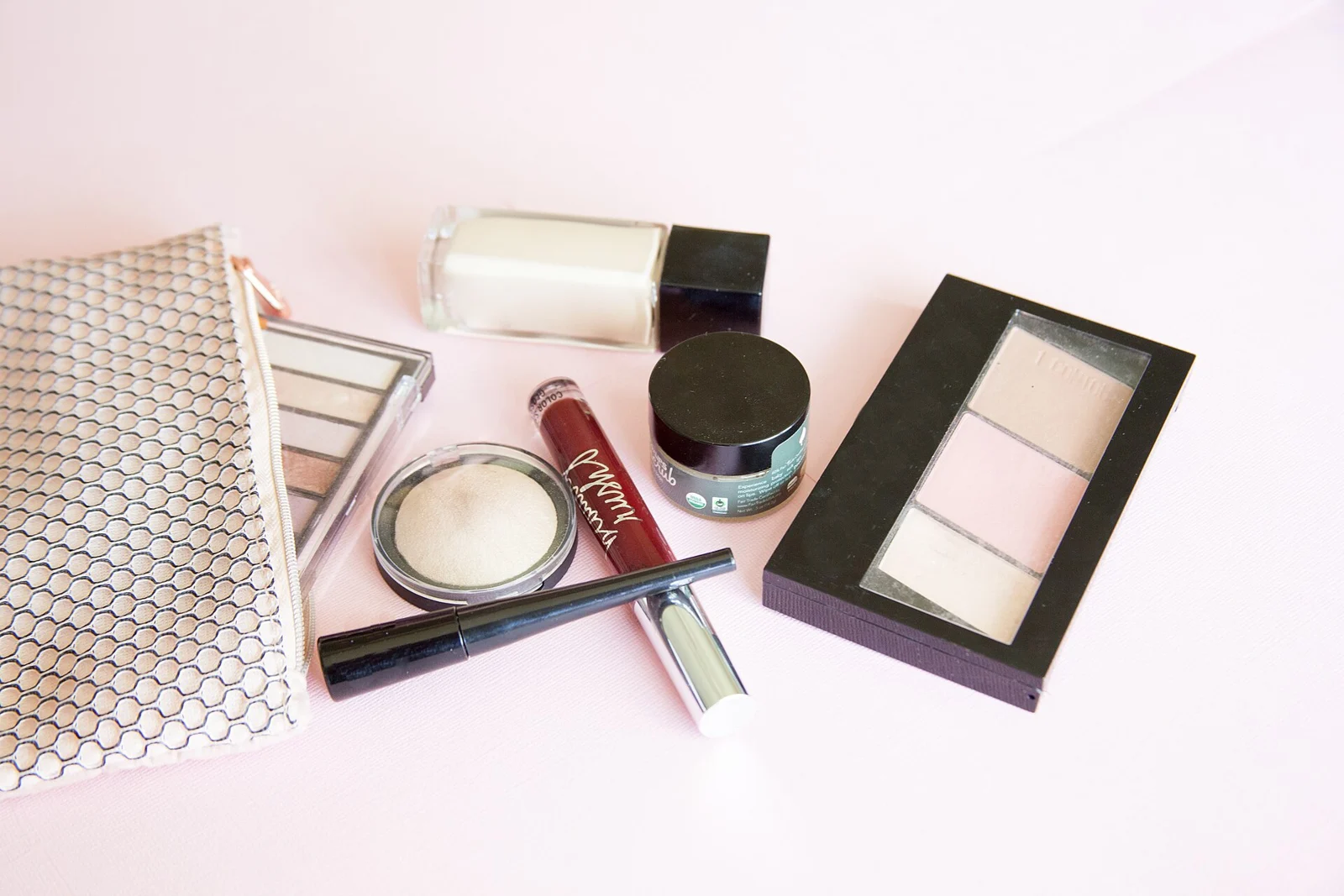
In the first proposal, imagine a distinct berry-toned lip against otherwise quiet cosmetic color. The eye has no competing dark graphic edge. I would choose this composition if I wanted one concentrated area of color to be the most deliberate-looking cosmetic decision. The interest is in that small, definite shape rather than in accumulating several coordinated products.
A dramatic lip need not invite a matching cheek, matching nails and an additional eye palette to justify itself. In this particular proposal, those additions would change the hierarchy. Someone who enjoys a more elaborate composition might want that change; someone seeking one clear focal idea could stop before turning it into a complete color collection.
The eye supplies the definition
For the second proposal, imagine a dark, clearly defined eye contour with much quieter lip color. The most distinct edge now sits higher in the composition, while the lip is less insistently colored. I would choose this idea when the defined eye shape was the feature I wanted the makeup to discuss.
That preference says nothing about which products or technique would suit an individual. It also does not make the quieter lip an obligation: this is one proposed relationship, not a rule that eyes and lips must never both be emphasized. Giving both equal emphasis would simply be another composition with another purpose.
Fewer focal decisions does not establish fewer minutes
Getty describes emphasis as the part of a composition that catches attention, often through contrast. That is the limited visual vocabulary behind these proposals. Neither has been tested on a face or with an audience, and a described focal point does not guarantee that everybody will notice the same thing first.
A defined eye may require care or skills that a person does not want to use; a strong lip may ask for a different kind of attention. A restrained-looking result is not necessarily quick or effortless. Choose the desired emphasis first, then separately consider the actual products, directions and work involved for you.
Shop for the missing role, if there is one
Before buying another set, describe what is absent from your existing choices: a definite lip-color area, an eye-defining option, or nothing at all. That description is more useful than assuming a low-complexity idea requires a specially marketed minimalist kit. Existing appropriate products may already serve the role.
Keep each product’s intended area and actual directions intact. This feature authorizes no cross-use between lip and eye products and supplies no hygiene or health assessment. Its purchase question is aesthetic and specific: which single emphasis do you want to explore, and do you genuinely need something new to explore it?
Sources & further reading
Published sources for the details and examples discussed in this story.