An outfit can have a clear meeting point at the waist or let its lines continue past it. Neither choice owes anyone an explanation about hiding, lengthening or correcting a body. Start instead with the drawing you want the clothes to make. For this original comparison, imagine one plain dark dress and a matching-color cardigan designed to be worn either open or using its existing fastening. Keep both garments, the shoes and the color family fixed. No belt or new piece is introduced.
The fastening creates a place to pause
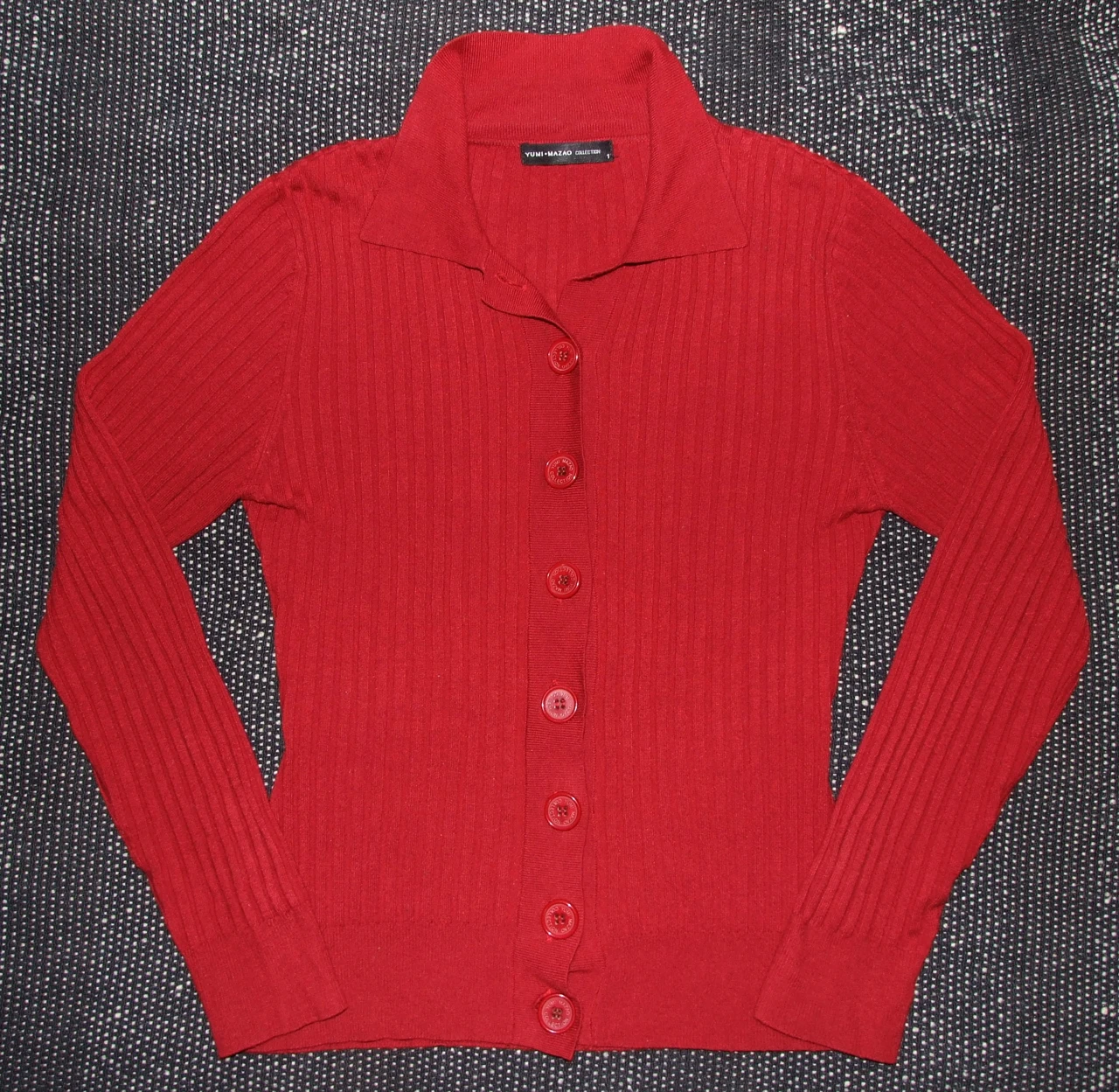
In the first proposal, the cardigan uses its intended central fastening near the waist while its upper and lower fronts remain open in their designed arrangement. The meeting draws attention to a specific point. Above and below it, the edges separate again. I read that as a small interruption in the otherwise similar dark surfaces, rather than a promise that the wearer's outline becomes a particular shape.
Getty describes emphasis as attention drawn to a part of a composition through differences such as shape or size. That is a useful general term for the proposed meeting point. It does not establish how a particular knitted garment will fall, whether a fastening pulls or whether the arrangement will feel comfortable. Those require the actual clothes, not an imagined illustration.
The open layer lets the line continue
For the second proposal, leave the same cardigan open. Its two front edges now continue along the dress rather than joining at the chosen midpoint. There is still a shape to discuss; the absence of a fastening emphasis is not an absence of styling. I would look at how the two edges frame the dress and how far their lower ends continue beside it.
This is a continuous-line preference, not a claim that the outfit makes someone taller or slimmer. Nor does an open cardigan always produce the same outline. The proposed garment is deliberately simple so the difference can be explained. An actual collar, textured front, uneven hem or contrast trim could introduce another relationship worth considering on its own terms.
Keep the garments; change the intention
I would choose the first arrangement when I wanted the outfit to gather around a visible meeting point. I would choose the second when I wanted the dress to remain a longer uninterrupted field between the cardigan edges. The decision can change from one occasion to another without requiring a new judgment about the person wearing it.
There is no instruction here to add a fastening, pin fabric or force a cardigan into a position it was not designed to hold. If the existing closure does not work comfortably with the dress, the imaginary proposal has not established a practical solution. A visual idea is useful only when the real garments can support it.
A belt is not the missing purchase
Before shopping to define the outfit, see whether an existing layer already offers a relationship you enjoy. The relevant question is not which accessory will improve your body. It is whether you prefer a pause in the clothes' lines or their continuation. Either can be complete without a belt.
If a different layer is genuinely wanted, inspect its actual fastening, length and behavior with the intended dress. We have not tried on or tested a product for this feature. Buying another piece should answer a visible and practical question that remains, rather than fill an assumed obligation to mark the waist in every outfit.
Sources & further reading
Published sources for the details and examples discussed in this story.