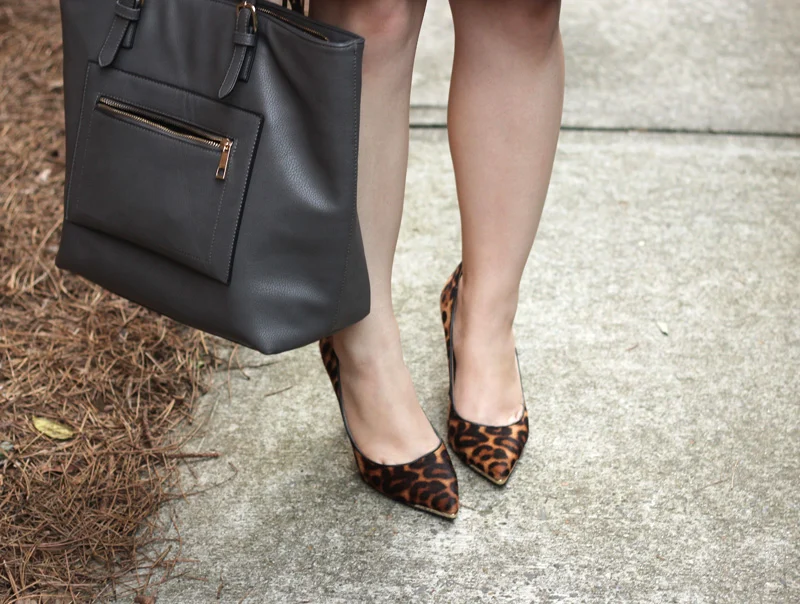
A work bag usually has an unglamorous job description: protect a laptop, hold lunch upright, and leave a hand free for a ticket or coffee. Its shape on a shop shelf tells you little about how it handles that combination. Before choosing a new tote, use one ordinary working day as your brief. The right bag should accommodate that day without needing several extra organizers to become usable.
| Commute need | Detail to check | Tradeoff to consider |
|---|---|---|
| Laptop plus lunch | Compartment and opening measurements | A rigid box can use the base before the laptop is added. |
| Frequent small-item access | Pocket location with the bag worn | More pockets can mean more places to search. |
| A bulky winter layer | Handle fit over the actual coat | A comfortable empty-bag trial may change when loaded. |
Make the load visible
Empty your current bag onto a table and separate daily essentials from things that have accumulated. Include the laptop charger if it travels with you, a water bottle filled to its usual level, and the actual lunch container. A bag can look spacious until a rigid container uses its base. Pack this load into a bag you already own and note exactly what is awkward. You now have a practical requirement rather than a general wish for more pockets.
Check dimensions in the right order
Compare the laptop dimensions with the seller's stated compartment dimensions, including any padded sleeve you intend to keep. An advertised screen-size category is only a starting point. Then consider the opening: a compartment that is wide enough inside may have a narrower zipped entrance. Ask the retailer about an unclear measurement before ordering. The FTC recommends comparing model details and total costs, which is particularly useful when several shops use almost identical photographs for different sizes.
Think about the journey
For a crowded train, a closeable opening and a shape you can keep near your body may matter more than a broad, open top. For a short walk from a car, easy access may take priority. Try the handles over the coat you normally wear and consider whether the bag will knock against your hip. These are personal fit questions; a handle-drop measurement alone cannot guarantee comfort. Avoid assuming that an optional shoulder strap changes a heavy bag into a comfortable one.
Give pockets specific jobs
An outer pocket is useful for something you reach for frequently, but not automatically the best place for valuables. A removable pouch can group small items without committing you to the manufacturer's fixed layout. Compare an organized interior with an open interior honestly: built-in sections reduce flexibility, while a completely open bag asks you to create your own system. Choose the version that solves your observed problem instead of paying for a pocket count.
Order with the return journey in mind
Read the care instructions, closure details, and current return conditions. Check whether sale items have different terms and who pays return postage; the FTC specifically encourages checking these costs. Keep tags attached during an indoor packing trial. Place the loaded bag where it normally sits and check whether it stays stable and opens easily. If it only works when half your daily load is removed, return to the brief rather than buying more accessories to rescue it.
Sources & further reading
Published sources for the details and examples discussed in this story.