A glossy accessory can be attractive without being silk. One concrete counterexample is enough to keep the shopping language precise: Spoonflower describes its fabric named Satin as one hundred percent polyester, and its comparison table separately lists the construction as satin weave. The product name does not establish silk content. Read the actual composition before treating a familiar surface word as the material requirement you wanted.
| Original purchase brief | Information that answers it |
|---|---|
| A light-catching visual accent | Actual appearance in the intended arrangement |
| Specifically documented silk content | The actual item's relevant fibre-content information |
| Only satin wording supplied | Composition still needs clarification |
Two accessory briefs can prefer the same look
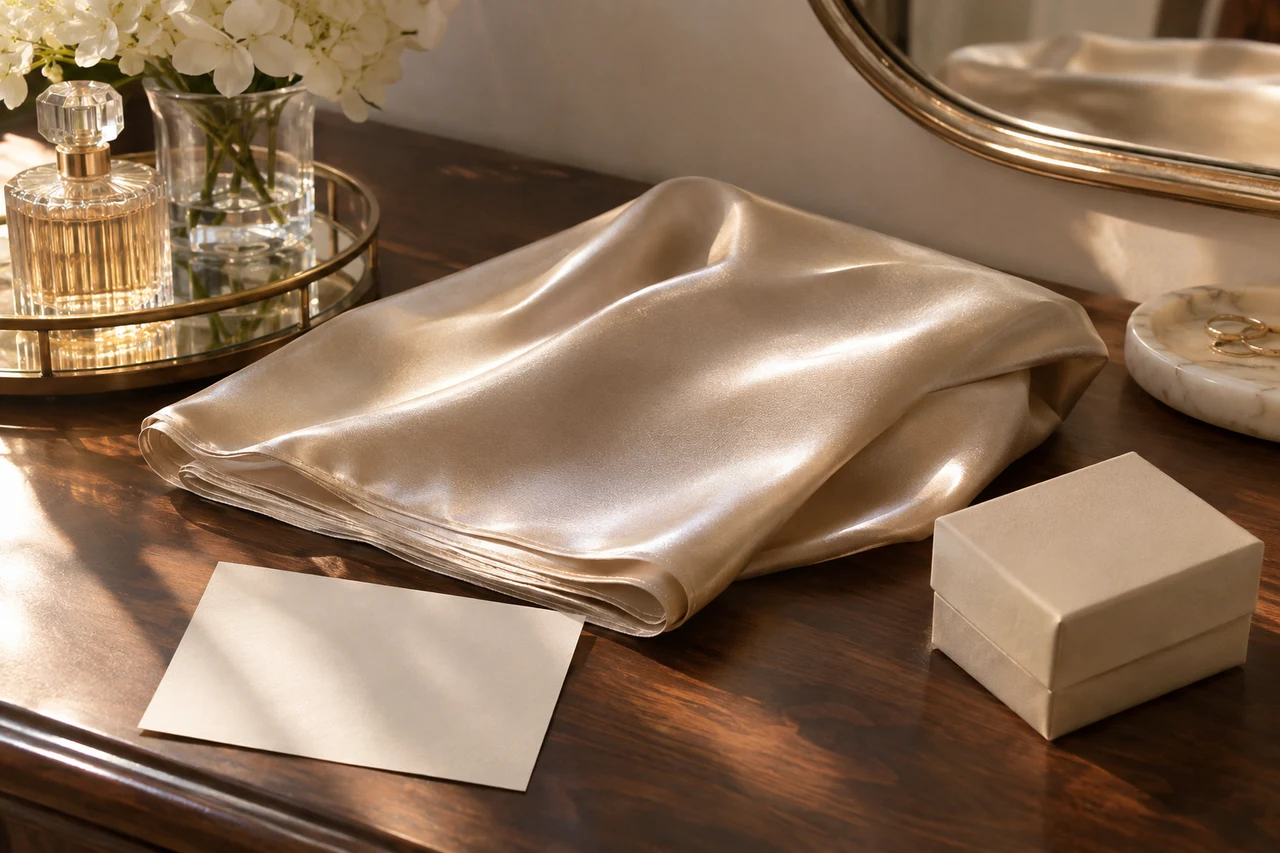
Imagine one shopper who wants a light-catching accent beside a simple evening outfit. Another wants an accessory with specifically documented silk content. These are original briefs, not real scarves, inspected garments or samples handled by this publication. Both people may enjoy a glossy appearance while asking different purchase questions.
For the first, the desired visual role remains an appearance preference to assess on the actual item. For the second, a word suggesting shine cannot complete the fibre-content enquiry. Do not quietly change the silk requirement into a sheen requirement simply because the photograph suits the outfit.
Keep the named fabric example narrow
Spoonflower's actual Satin description supplies the polyester content for that named fabric. Its table keeps Fabric Content and Construction as separate rows. That is the relevant reading here: a product can be sold under the Satin name while its maker explicitly identifies polyester.
This article does not claim that every fabric called satin is polyester, or that a garment made by someone else contains Spoonflower material. It does not reproduce the maker's printed designs, textile photographs or comparison chart. The counterexample defeats a universal assumption; it does not identify an unknown accessory from its surface.
Resolve the composition before paying for the preference
For a real shortlisted accessory, retain its actual item identity and current composition description. If a listing supplies only satin or silky wording while the material matters to the purchase, ask the seller for the relevant content information. An attractive reflection, smooth-looking fold or familiar color cannot substitute for the missing statement.
Keep care, dimensions, feel and suitability for the intended use as separate enquiries. No friction, skin, hair, temperature, cleaning or durability result is claimed here, and no personal preference makes one fibre universally superior. Someone choosing primarily for appearance can still want an accurately described item; someone seeking silk can leave the content unresolved until supported.
Before paying extra for a material claim, establish what the actual offer says and what evidence answers the question. The useful comparison is between the declared brief and the specific item, rather than between two photographs whose lighting and surfaces may differ. A deliberate choice can enjoy the look while naming the content accurately.
Sources & further reading
Published sources for the details and examples discussed in this story.