Matte and shiny can sound like two simple boxes for an evening wardrobe. Actual garments often contain a more interesting mixture: a broad quieter field, a glossy fold or many small reflected points. Before choosing a finish, decide which part of the outfit you want to notice. Two museum references make the surface question concrete. Their photographs are not controlled lighting tests, and their different colors and silhouettes prevent treating them as a matched product comparison.
Small reflected marks and larger changing planes
The Met's French evening dress from 1925, object 2009.300.1279, is documented as silk with a surface of beads and sequins. The museum specifically notes the sequins' play of light. In the published front image, the decoration breaks the green field into repeated outlined shapes. I read its surface as many small visual events rather than one uninterrupted bright plane.
Charles James's 1947 Evening Coat, object 2013.383, offers a different documented relationship. The Met describes ribbed silk faille used with its glossy satin reverse and contrasts the coat body's duller sheen with brighter collar and sleeve areas, especially at the back. The front image we inspected shows broad changing light across the gold-colored form; we have not separately inspected a rear view or handled the cloth.
Duller sheen is not the same claim as no reflection at all. These references are useful because they complicate the shopping words, not because they prove every sequin, satin or faille behaves alike. The material identities come from the museum records. Surface brightness in a photograph does not independently identify a fiber or establish how it will look in a different room.
Keep the dark outfit; change the accessory surface
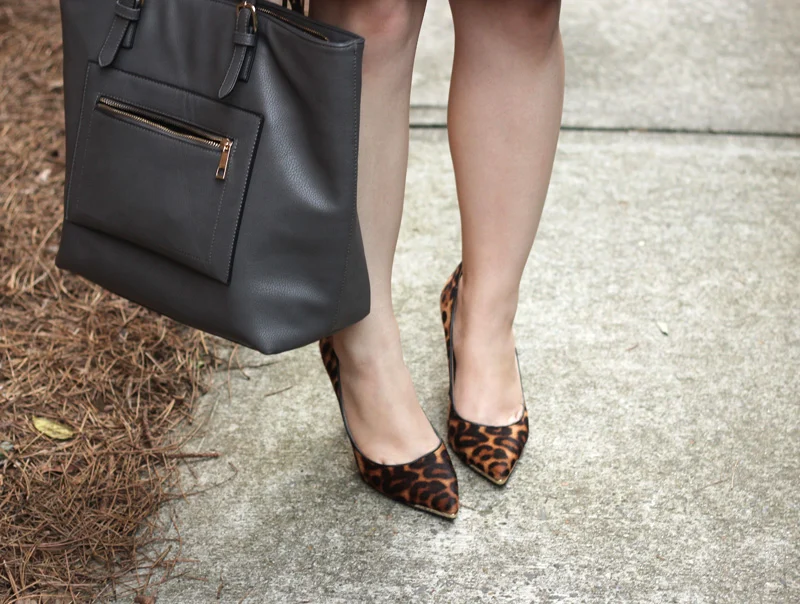
For an original composition, imagine one plain black dress, familiar dark shoes and a simple small bag. Keep their outlines and the broad color family fixed. In the first proposal, the bag has a visually quiet matte-looking surface. I would read the dress's neckline and shape as the main information, with the accessory continuing the darker field rather than announcing another bright area.
In the second proposal, imagine the same bag outline with a more reflective finish. Now a relatively small item could provide a visible interruption beside the dress. That is an intended composition, not a measured optical result or a product we tested. The actual light, surface and viewing angle could change whether the contrast appears as imagined.
My preference would depend on which part I wanted to lead. If the dress already had a neckline or outline I enjoyed, I would investigate the quieter accessory first. If I wanted one concentrated reflective note within a simple dark arrangement, the second proposal would be more interesting. Neither makes the outfit inherently more formal or more appropriate for a named event.
Ask for the finish you mean, not a category promise
Before ordering, seek useful views or a relevant sample of the actual finish with the pieces you intend to wear. A product called satin, metallic or matte still needs its own appearance and practical details assessed. This feature supplies no abrasion, cleaning, comfort or durability result, and no museum photograph licenses reproduction of the garment image on another product.
There is also no requirement to buy a new surface. An existing quiet bag may let the dress remain the part you care about. The useful question is where the outfit should catch attention: through repeated small details, a broad surface or one limited accessory. Answer that before treating shine as a condition of dressing for an evening.
Sources & further reading
Published sources for the details and examples discussed in this story.