A trouser label can remain unchanged after the hems have been shortened. Repeating the label's size in a resale listing therefore does not describe every dimension the buyer will receive. The original example here pairs a known alteration with a current measurement and a defined tape position. It is a method for describing this fictional item, not a size-conversion chart, a claim about a real seller's trousers or a guarantee of fit.
Keep the label and current length as different facts
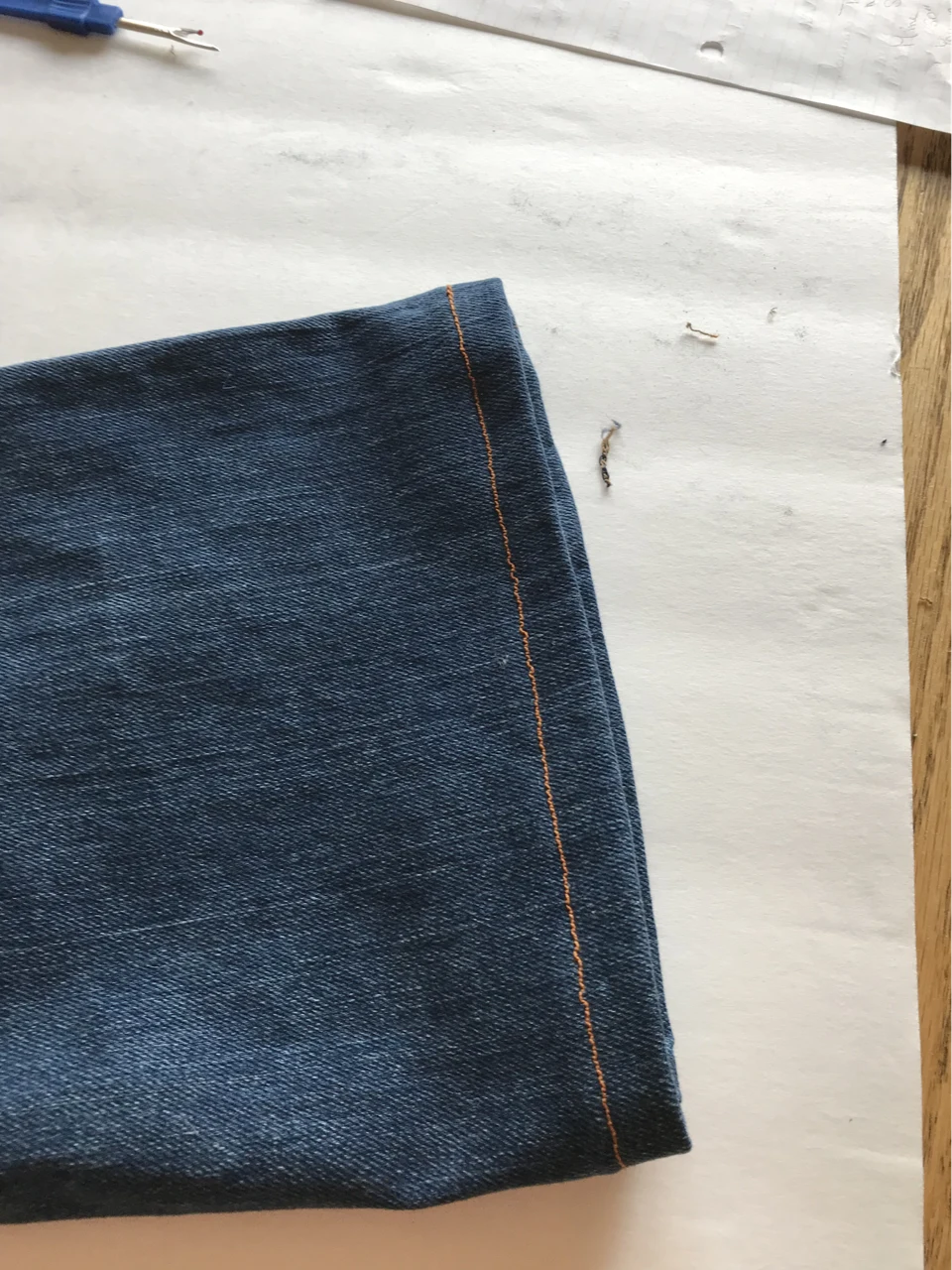
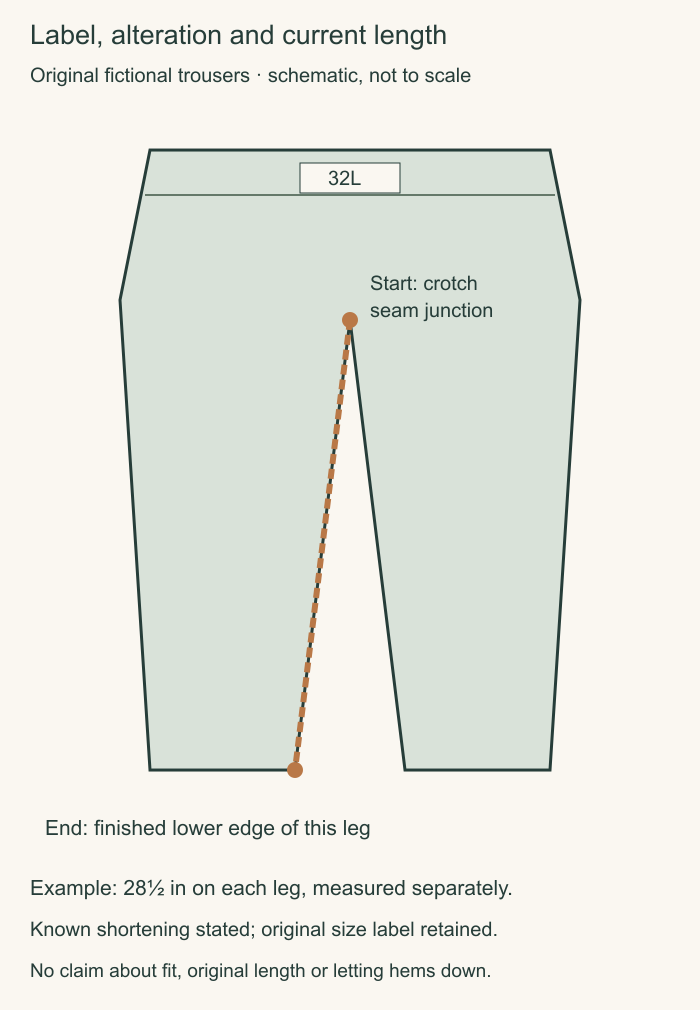
Suppose the fictional trousers retain a label marked 32L, and the owner knows both legs were shortened. A current inside-leg measurement is 28½ inches on each leg using the method below. The listing should preserve the label as written and state the known alteration alongside the measured length. It should not silently replace the label with a different brand size that seems more plausible.
Do not decode the entire label into measurements unless its maker's actual system has been established. The example deliberately uses the photographed label as a label. The measurement is a separate observation of the garment as offered. Likewise, knowledge that shortening occurred does not establish how much usable fabric remains inside the hem or whether the alteration can be reversed.
Show exactly where the tape begins and ends
For this example, lay the trousers flat without stretching them. Define the inside-leg measurement as following the inner leg seam from its junction at the crotch to the finished lower edge. Keep the tape along that stated path and record the unit. The original diagram marks those endpoints; it is not a manufacturer's technical drawing or a universal tailoring standard.
Measure the two legs separately rather than making one photograph stand for both. In our declared example each is 28½ inches. If the actual figures differed, report the difference and method rather than averaging them into one reassuring number. A curved seam or an unclear junction should be described or clarified instead of presenting an uncertain tape position as exact.
Write the whole condition note together
A complete original example can read: ‘Label reads 32L. Both legs are known to have been shortened. Current inside-leg length is 28½ inches on each leg, measured laid flat without stretching from the crotch seam junction along the inner leg seam to the finished lower edge. Current photographs show the label, full trousers, both hems and tape placement. No claim is made that the hems can be let down.’ Other real condition details would still need to be added.
eBay's US selling-practices policy requires the item's condition and defects to be described, with actual photographs for used items. That supports showing the current altered state. It does not supply the28½-inch figure, approve a measuring technique or guarantee that this garment will fit somebody who buys the label size.
Answer a different measurement request without guessing
If a buyer asks for outside-leg length, do not relabel the inside-leg number. Clarify the requested endpoints and take that measurement separately if you can do so reliably. Similarly, a question about hem allowance needs an actual assessment; it cannot be answered by subtracting a current number from a remembered original length.
Before publishing, read the size field, alteration note and images together. They should describe one current garment rather than three versions of it. Keep the private measurement record with the final listing so a later enquiry can be answered from the same defined points.
Sources & further reading
Published sources for the details and examples discussed in this story.