A wet commute can make leather shoes look as though they need immediate attention from every product in the cupboard. The order matters. Clarks’ official leather-shoe guide advises letting damp shoes dry naturally at room temperature before cleaning or conditioning. This article turns that limited guidance into a proposed household sequence, with the actual shoe’s material and maker instructions controlling each decision.
Establish what the upper actually is
Read the actual product information and care directions. A leather component somewhere on the shoe does not mean that every visible surface has the same material or finish. Suede, nubuck, coatings, mixed panels and decorative elements may need different guidance. Do not infer treatment permission from color or shine alone.
The Clarks guide is a general leather-shoe reference, not a care label for an unidentified pair. If the finish is unclear or the shoe’s own instructions differ, ask the maker before applying a cleaner. This article has not worn, soaked or inspected a particular model and makes no claim about restoring its original appearance.
Give damp shoes their drying stage
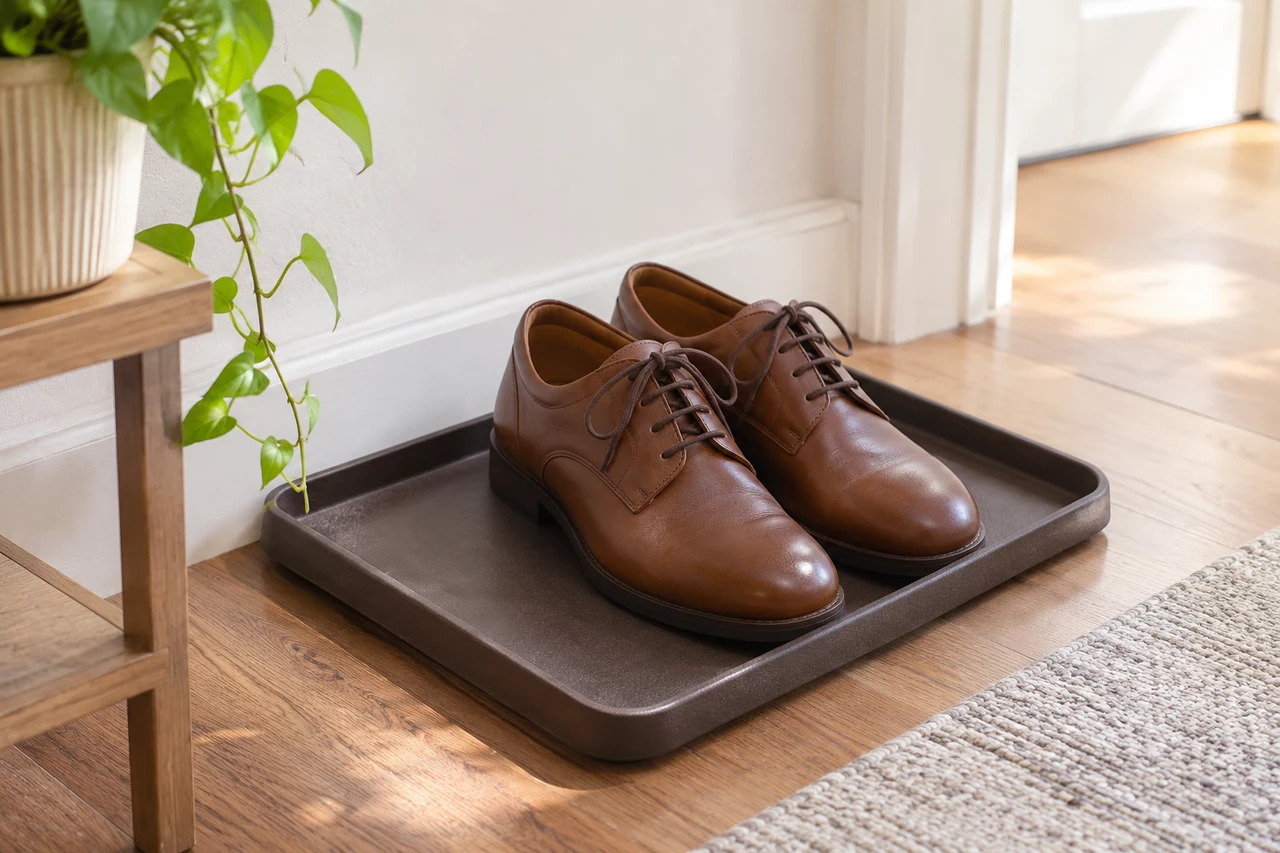
Clarks says damp shoes should dry naturally at room temperature before cleaning or conditioning and warns against direct heat such as radiators and hairdryers. Choose a stable place where they can remain undisturbed, following any additional actual maker directions. Do not put them beside a heater to meet the next morning’s schedule.
There is no universal drying duration in this plan. A surface that looks better does not establish the condition of every layer. If you are unsure whether the shoes are ready for the next care stage, consult the maker’s guidance rather than treating a convenient elapsed time as evidence. Keep any floor protection suitable for the location without wrapping the shoes in a sealed package.
Make cleaning a separate permitted action
Once the actual shoe is ready for cleaning, Clarks describes removing loose dirt with a soft brush or dry cloth and using a suitable footwear cleaner according to its directions. Match that advice to the identified upper and finish. An abrasive household brush or an all-purpose surface spray is not a substitute for the specified equipment.
Conditioner and polish are additional decisions, not compulsory ingredients in every cleanup. Confirm that a product is suitable for the finish and follow both product and shoe instructions. No amount, application frequency or homemade mixture is prescribed here. If stains or damage remain, a specialist question can be more useful than another layer of product.
Return the pair to use without a restoration claim
When the applicable care stages are complete, follow the maker’s storage guidance. Clarks discusses shoe trees where appropriate, but their suitability still depends on the actual pair. Supporting shape is different from proving that water exposure has caused no damage or that a shoe is waterproof again.
Before buying a large care kit, list the permitted tool and product for these shoes. You may already have the appropriate soft cloth, while a conditioner in the bundle may be unsuitable. Keep a short note of the care directions with the purchase record. This sequence can organize the decision after rain; it supplies no physical wear test, waterproofing guarantee or forecast of the shoes’ remaining life.
Sources & further reading
Published sources for the details and examples discussed in this story.