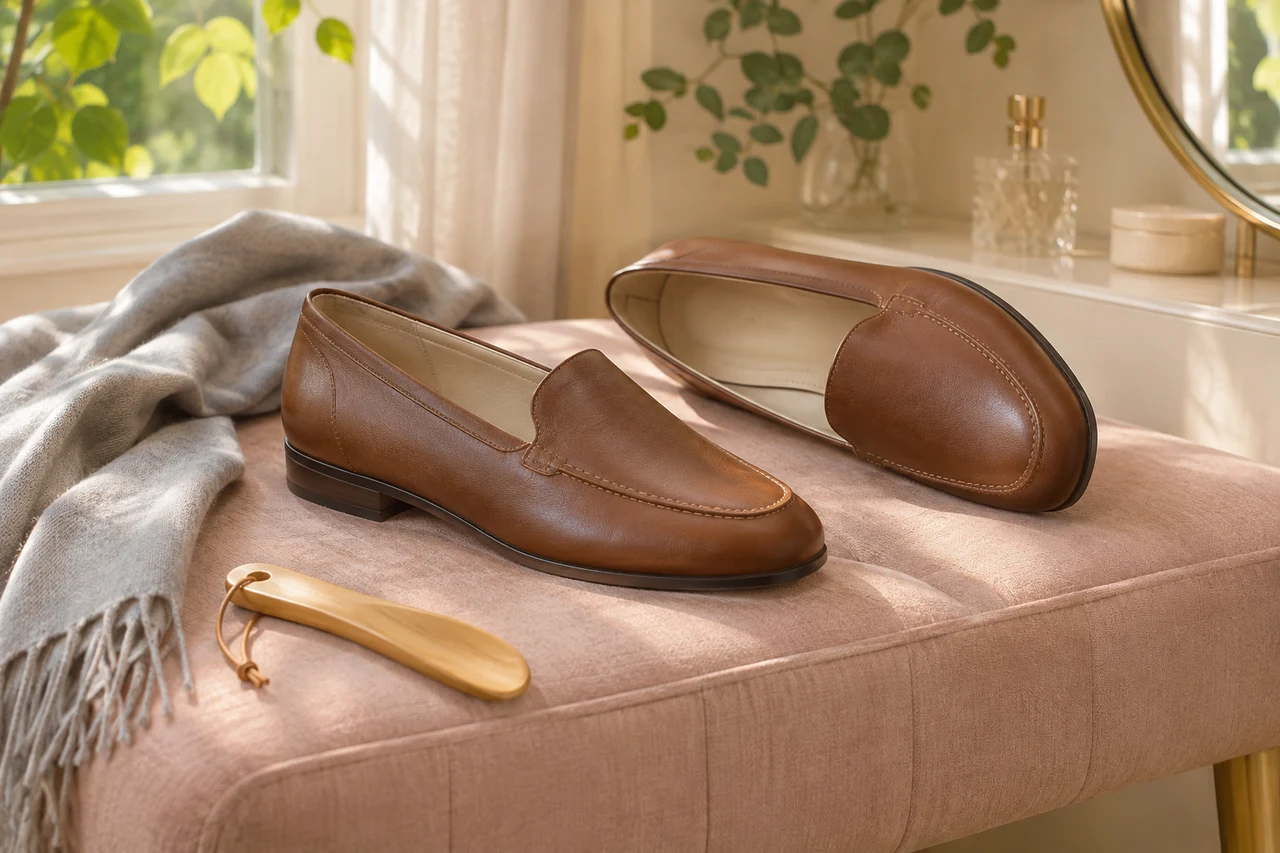
A pleasing pair of shoes can have a very short online description: leather, brown, low heel. The material word may be the detail you care about most, yet it still needs a location. Are you reading about the upper, the inside or the outer sole? The European Union’s official footwear-label guide makes those separate components a useful starting point for a more precise shopping conversation. Its EU scope matters; this is not a universal label rule for every market.
| Component in the invented example | Invented material entry |
|---|---|
| Upper | Leather |
| Lining and insole | Textile |
| Outer sole | Other materials |
Read the part beside the material
Your Europe’s guidance identifies three main parts for the material description: the upper, the lining and insole, and the outer sole. It lists leather, coated leather, textile and other materials as material categories, communicated through the relevant pictograms or written indications. Keep the component and its material together rather than collecting a reassuring material word from elsewhere on the listing.
The guide also says the label is attached to at least one shoe in a pair and should be visible and accessible. When looking at an actual pair, check both shoes before concluding that the description is absent. Online, ask for a readable view or written transcription of the relevant information; a styled photograph does not provide that by itself.
One invented label, three different answers
For this original example, imagine a shopping note reading: upper—leather; lining and insole—textile; outer sole—other materials. These are invented entries, not a label inspected on a real pair. The leather entry belongs to the upper. It does not turn the textile entry for the inside into leather, and the outer-sole entry remains its own material category.
That distinction can change the purchase question. If the appearance of the upper drew your attention, its entry may be the useful starting point. If you were specifically looking for a particular lining or insole material, the same label answers a different question. Neither preference needs to become a universal ranking of shoes. Identify the part you care about before deciding what the seller’s short description has established.
Leave the remaining questions with the actual product
A useful message is: “For this exact style and colour, could you confirm the upper, lining/insole and outer-sole material descriptions? Your listing mentions leather, and I want to understand which component that refers to.” Include the product link so the seller can answer for the candidate in your basket rather than a similar shoe from another range.
Fit, care and the performance you need deserve their own product-specific information. Do not treat a material category as a wear test or choose a maintenance product from the word leather alone. Before ordering, connect the confirmed component information with your own material preferences, the style you want and the seller’s opportunity to assess fit. A precise answer can support a purchase—or explain why a different pair better fits your brief.
Sources & further reading
Published sources for the details and examples discussed in this story.