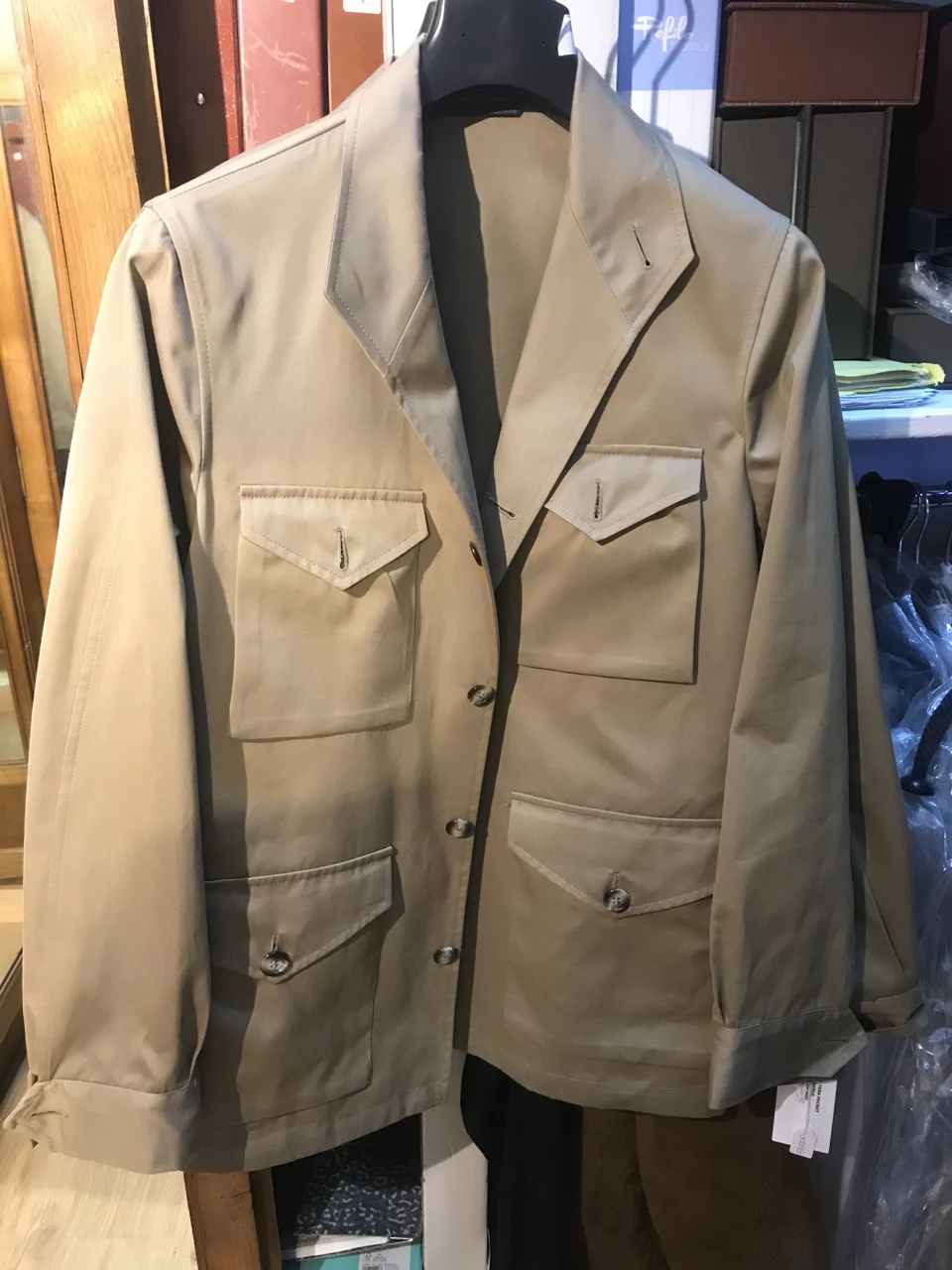
A jacket selected while wearing a thin tee may behave differently over the sweater it is supposed to accompany. The useful comparison keeps the jacket unchanged and changes the intended layer. UNIQLO’s US Utility Jacket, product 486816, supplies a named example; the observations below are original fiction, not a fitting we conducted. The purpose is to make the two wearing situations legible before deciding whether to keep a garment.
Do not turn a body-size chart into a garment measurement
The maker’s product representation distinguishes Product Size and Body Size. Its Body Size explanation refers to body measurements corresponding to a product’s size. That is not the same as a measurement of the finished jacket laid flat. A body chest range therefore cannot be doubled or subtracted to invent the jacket’s available room over a sweater.
The example uses one hypothetical jacket throughout. It does not infer a size recommendation from the displayed model, the word “oversized” or an uninspected chart. Keep the actual product identity with the selected size and color when recording a real comparison. Changing two garments and two layers at once would make the reason for a difference harder to identify.
Preserve the return question before the fitting
UNIQLO’s US online return policy describes a 30-day period from shipment and requires items to be unworn, unwashed and unaltered with their original tags. Other exclusions and the purchase route also matter. A brief indoor comparison is not an automatic promise of return eligibility; retain the actual order information and check the applicable terms.
In this fictional example, Ren leaves the tags attached and does not wash, alter or wear the jacket out. Ren has a plain tee and the particular crewneck sweater intended for regular use. Neither is being bought to make the jacket work. The comparison concerns a wardrobe already present, without turning a trial into an alteration project.
Run the same modest sequence twice
First Ren tries the jacket over the tee, with the same pocket contents excluded in both versions. Ren closes it normally, rests both arms, reaches forward as though toward an ordinary desk and then sits. The invented note is specific: “Over tee: closes without rearranging the layer; forward reach does not lift the tee hem; seated front remains where expected.” These are fictional observations, not measurements or a fit standard.
Next Ren repeats that sequence over the intended crewneck sweater. The invented note changes: “Over sweater: sleeve pulls sweater cuff back during the same reach; front needs adjustment before sitting.” The second note is not reduced to “size bad.” It identifies which layer and action produced the concern, leaving the reader able to repeat the comparison with their own actual garment.
Ren stops short of forcing a closure or making exaggerated movements to prove that a purchase can be kept. The two notes also do not establish warmth, long-term comfort or fabric performance. They describe a bounded comparison of ordinary intended actions, not a professional fitting assessment.
Make the intended use choose the next step
Ren wanted the jacket primarily for the crewneck sweater, so a satisfactory tee-only result does not answer the original need. The next step is to consider another appropriate option under the actual purchase terms, rather than remove tags and hope that the sweater problem disappears. This does not guarantee stock, an exchange or a refund.
A different reader may genuinely want a tee-layer jacket. That is a different intended use, not a reason to discard the sweater observation. Keep both complete notes and name which one governs the decision. A retailer’s size label can organize a selection; it cannot replace the wearing situation for which the garment is being chosen.
Sources & further reading
Published sources for the details and examples discussed in this story.