A coat kept for years can become attached to a family story without acquiring a complete documentary history. A relative may remember an occasion; a label may identify a brand; a repair may be visible without anyone knowing who made it. A useful note does not have to choose between a polished legend and no story at all. It can keep those different kinds of information beside one another, with enough space for uncertainty.
Begin with what is actually present
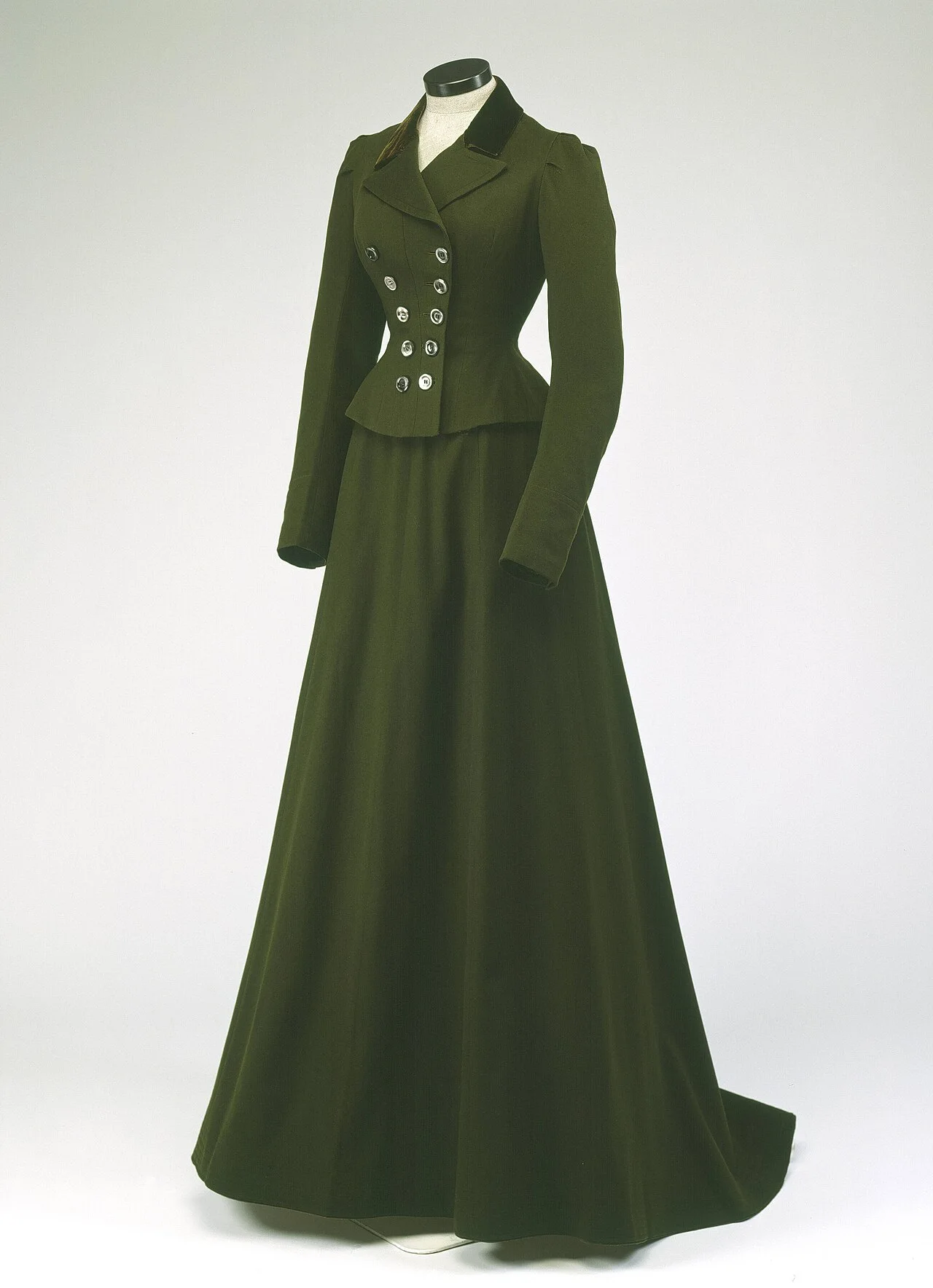
For an original hypothetical example, imagine a dark wool-looking coat with a maker's label and a repaired pocket. Wool-looking describes an appearance, not a confirmed fibre identification. Copy the label's actual wording rather than expanding it into a manufacturing date or place that it does not state. Describe the repair you can see without deciding who did it or why.
A short photograph reference can help you connect the note with the correct garment. Use a description that will still make sense when several similar coats are stored together. This is an identity aid for a personal record, not authentication of a label or a recommendation to expose or handle fragile clothing in an unsuitable way.
Give a remembered account its own voice
Suppose a relative remembers the coat being worn on a winter visit but cannot name the year. Write whose recollection it is and retain the uncertainty. An approximate memory should not become an exact calendar date because the finished note looks tidier with one. If two people remember different occasions, record the difference instead of merging their accounts into an event neither actually described.
The Library of Congress's primary-source analysis guide separates observation, reflection and questions. That educational framework is useful background for keeping an interpretation from becoming an unmarked fact. The coat note here is our own editorial exercise, not a museum cataloging procedure or a claim that the garment has been professionally examined.
Let the unanswered question remain useful
A third area of the note can hold what you would like to establish: the occasion, the earlier owner, or the meaning of a handwritten name. Link any later answer to its actual source. A date on a photograph, a dated receipt and a person's recollection can provide different evidence; one should not silently stand in for another.
End with a brief reason for keeping the coat that belongs to the present owner. It may be the cut, a remembered connection or the pleasure of knowing that someone repaired it. That reason does not need to become a resale-value claim. Before buying a special display or storage product, identify whether you want ordinary access, appropriate preservation advice or simply a place for this note. The story can remain meaningful without becoming more certain than its evidence.
Sources & further reading
Published sources for the details and examples discussed in this story.