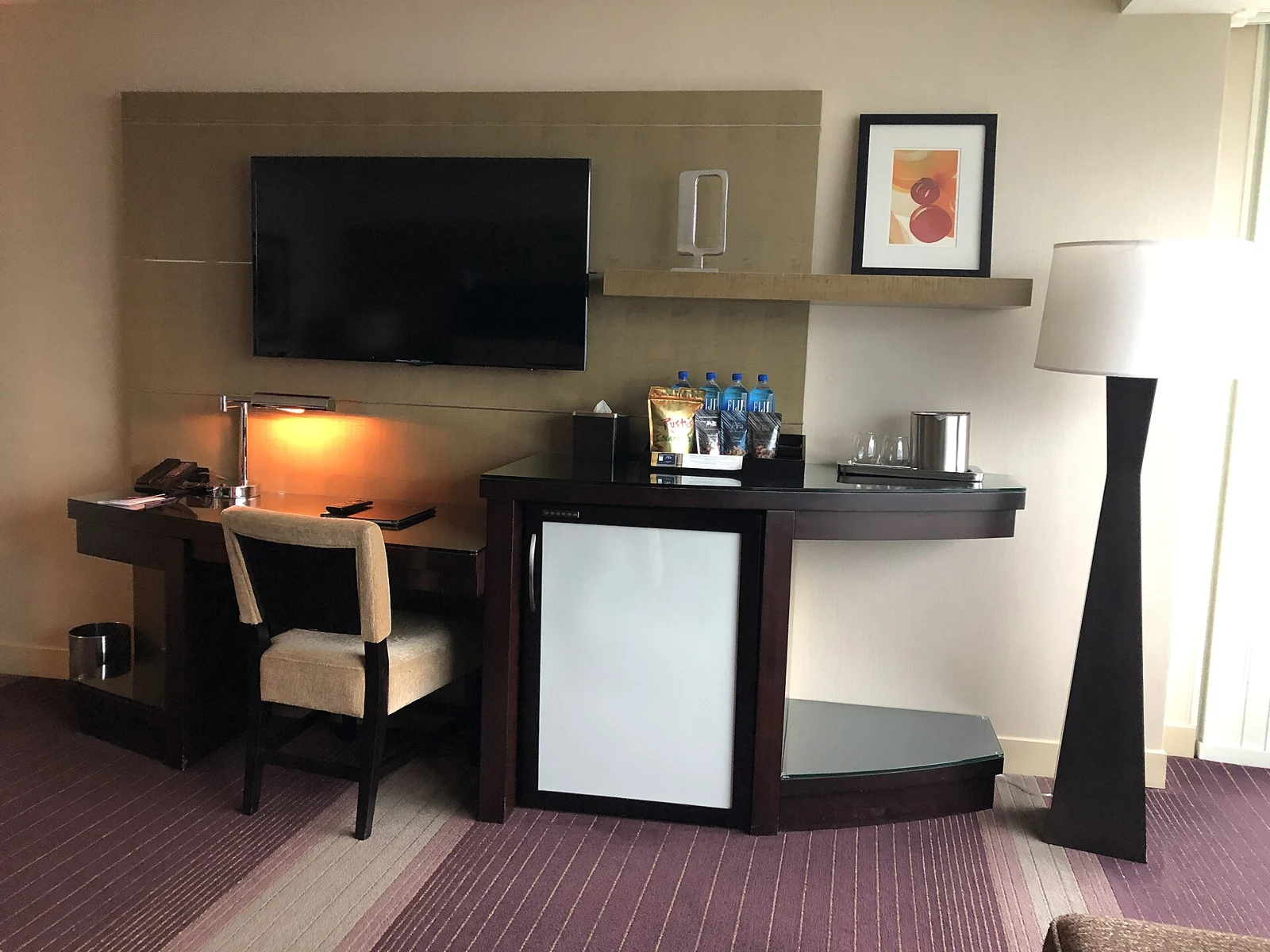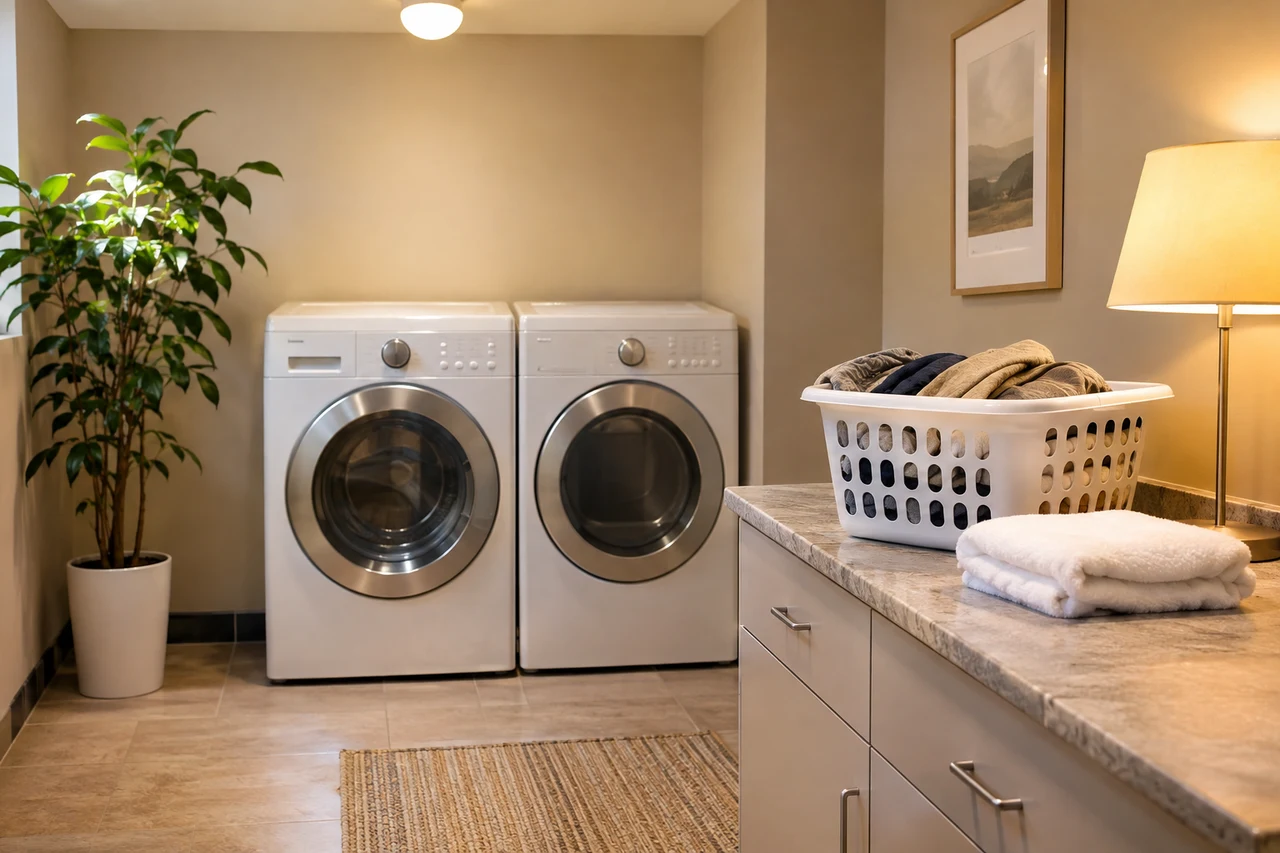
A laundry room that is open when you return and a service that returns your clothes are different conveniences. The Hyatt House New York Chelsea facility guide names both: 24/7 on-site Guest Laundry and same-day dry cleaning. That short pairing is useful because it identifies two service modes without supplying a complete timetable for either. Here, the guide is a published example, not a report of a stay or a promise that every listed service is available for a future booking. Its URL carries a 2023 document path; confirm the arrangement for the intended dates. The practical distinction is who operates the process and when the garment comes back into your possession.
An open room is the beginning of the job
Imagine returning at eight in the evening with an ordinary washable travel shirt. The guest-laundry listing gives you a reason to ask about using the on-site room then. It does not tell you whether a machine is free, what payment it takes, whether detergent is supplied or how long the particular program runs. Those are separate details, and none can be calculated from the phrase 24/7.
For a self-operated plan, the guest's evening has several appointments with the task: bring the item and supplies, operate the available equipment, return when attention is needed and take the clothing away. Drying and putting the garment back into the travel bag remain part of the plan. A room accessible overnight does not turn those actions into a staff collection service. This is why a late opening can be useful while still requiring time that competes with dinner or sleep.
A handoff moves the work and creates a collection point
Now imagine a different item for which the intended process is a professional dry-cleaning service. The guide's same-day wording names a service, but it does not state the latest acceptance time, operating days, collection method, charge or return hour. An eight-in-the-evening handoff therefore cannot be assumed to produce a garment ready before the next morning's departure. Ask for the actual acceptance and return arrangements before using that service.
A concise enquiry could be: ‘I would like to hand over this item on Tuesday. What is the latest acceptance time for the service, and when and where would I collect it? I leave at nine on Wednesday morning.’ That supplies a usable boundary without asking the hotel to interpret ‘soon.’ If the confirmed return is after departure, the service does not fit this particular trip even if the advertised description is accurate.
Put the two evenings beside the departure
In the self-operated version, write the moments you personally need to be present, leaving the machine's actual cycle information blank until it is known. In the handoff version, write acceptance, the confirmed return and collection. These are two different sketches. A dinner reservation may conflict with tending a laundry task; a departure may conflict with collecting professionally cleaned clothing. The answer can change with the traveler even when the hotel remains the same.
Suppose Tuesday evening is the only free period and Wednesday morning is departure. If the hotel confirms workable guest-laundry access but cannot confirm dry-cleaning return before departure, the available evidence favors only the first schedule. It does not authorize putting the second garment into a washer. Service availability and the garment's permitted care remain separate decisions. Another sensible result is to defer the task and keep that item unworn for the rest of the stay.
Ask about the actual service, not an imagined package
Before committing, establish what the charge covers and what happens after processing. Does the guest retrieve the item from a room, a desk or another collection point? Is there a stated collection window? A request for those details is more useful than assuming the word laundry includes washing, drying, pressing and delivery to the room. The guide does not publish such a package.
Keep the confirmed arrangement beside the departure note. There is no need to reproduce a care-symbol chart or buy extra travel clothing merely because two service names appear together. Choose the mode that can actually handle the intended item within the trip, with the guest's own work and the service's return obligations visible as different parts of the day.
Sources & further reading
Published sources for the details and examples discussed in this story.