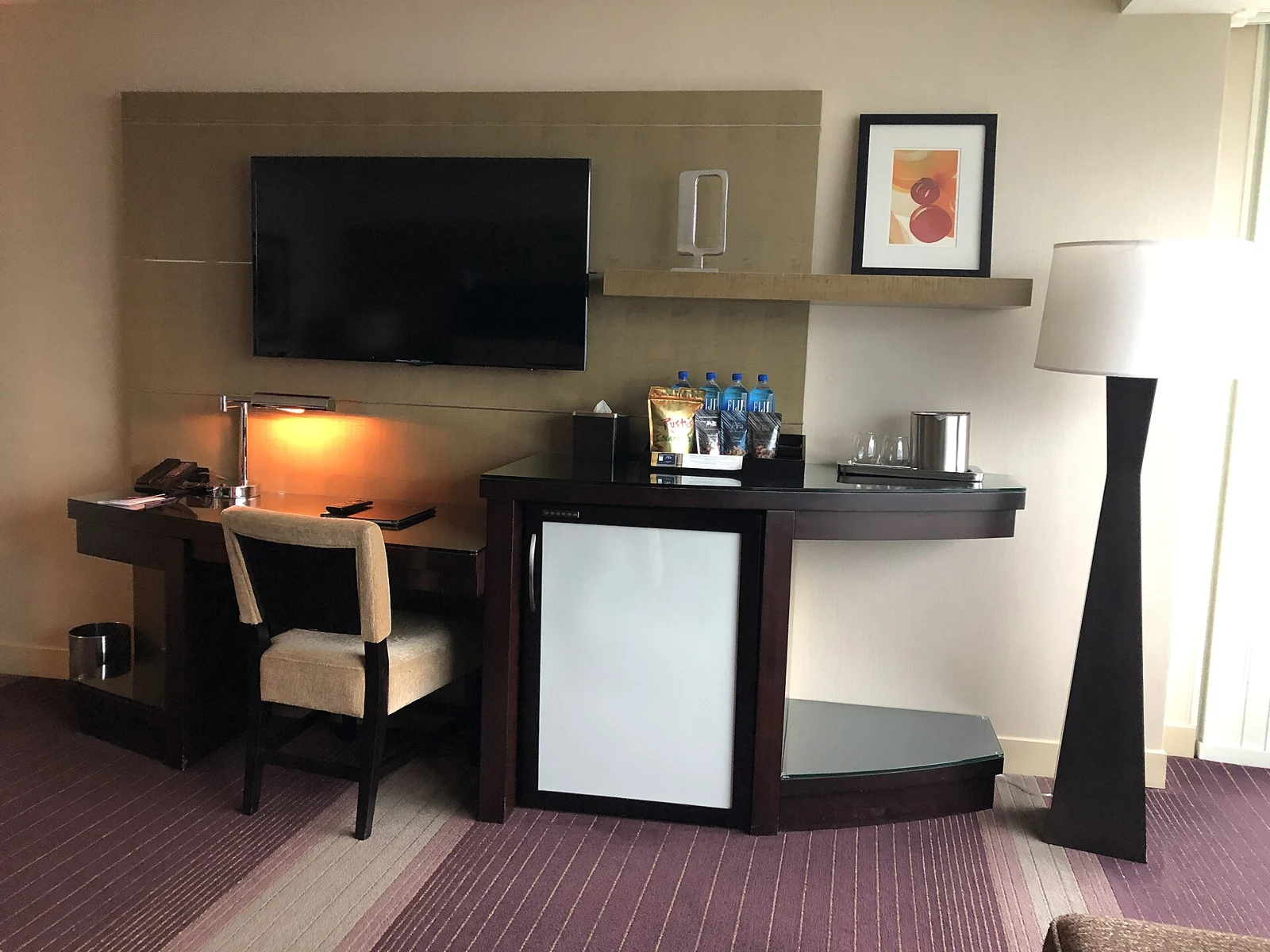
Working for an hour during a short trip can change what you need from a hotel room. A beautiful chair beside a window does not necessarily make a usable work surface, and a general Wi-Fi claim says little about how your own tasks will work. Before booking, identify the minimum setup that would make the work period practical. Then ask the property specific questions rather than paying for an impressive room category whose useful details remain unclear.
| Task | Booking question |
|---|---|
| Brief messages | Is the relevant room category suitable for a short laptop task? |
| Private work call | What confirmed room features and employer rules apply? |
| Arrival-day work | When is room access actually available? |
| Backup workspace | What are its access hours, charges, and availability? |
Define the task, not an imaginary office
Decide whether you need to answer messages, join a call, or work with several documents. A short administrative task may need less space than a video meeting or a spreadsheet session. Note any employer requirements for privacy, equipment, or network use and follow them separately. A travel article cannot authorize handling sensitive work in a public area. The minimum setup should reflect the task you are actually allowed and expected to complete during the trip.
Ask about the exact room type
Look for photographs and a description of the room category you would book, not just the hotel's most spacious suite. Ask whether it includes a desk or suitable table, a chair, and accessible power points. If these are essential, request written confirmation and understand whether the feature is guaranteed or only a preference. A general property photograph can be accurate and still show a room you are not buying. Keep the answer alongside the booking rather than relying on memory.
Consider timing and location
Check the planned work period against arrival, check-in, and departure arrangements. Do not assume that an early arrival gives you immediate room access or that a late checkout is automatic. Consider whether nearby activity could affect a call, but avoid treating a quiet-room request as a guarantee of silence. If the property offers another workspace, ask about availability, charges, and access hours. A backup only helps when you know whether you can actually use it.
Compare complete booking conditions
Read the total cost, payment timing, cancellation terms, and any stated service charges. The FTC's travel advice encourages checking the real offer and avoiding pressure or misleading deals. If booking through a third party, identify who handles changes and whom to contact if the room description differs. Save the specific listing and confirmation. A cheaper nonrefundable rate may be reasonable for firm plans, but it is not automatically better value when work or travel arrangements may change.
Keep the solution proportionate
If only one short task needs attention, compare the cost of a different room with a realistic alternative approved by your employer. Do not buy a collection of travel-office accessories before finding out what the accommodation supplies. Pack the necessary charger and any adapters appropriate to the destination, checking manufacturer requirements for electrical equipment. Build a little time around the work period so a minor setup problem does not consume the entire break. The aim is to complete the task and return to the trip.
Sources & further reading
Published sources for the details and examples discussed in this story.